FIA Foundation calls for greater commitment to action at UN High-Level Meeting on Road Safety

The FIA Foundation joined global leaders, ministers, officials and experts from governments, the UN, civil society, academia, and the private sector to review and set out ways to advance progress towards the conclusion of the Sustainable Development Goals in 2030.
Convened by the President of the UN General Assembly and the World Health Organization, the event theme was ‘Scaling up and accelerating implementation of commitments to halving road traffic deaths and injuries by 2030.’ Road crashes claim nearly 1.2 million lives each year and are the leading cause of death among the world's children and young people aged 5-29.
Alongside the event, a series of high-level side events took place, bringing together FIA Foundation partners, international partners and governments in an agenda to catalyse action, develop technical know-how, and demonstrate how to mobilise political support and take meaningful, impactful, and scalable action.
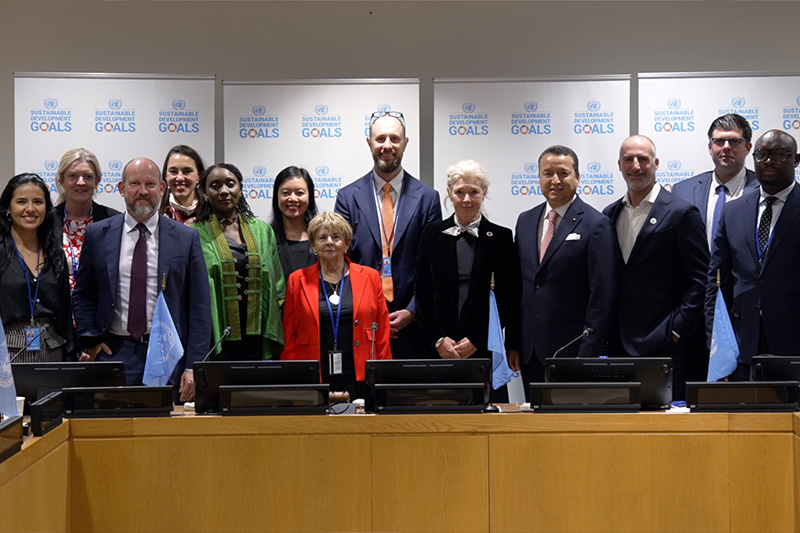
The FIA Foundation co-hosted the official UN side-event ‘Commitments in Action Roundtable: Multistakeholder Accountability for Safer Roads’ with the Global Alliance of NGOs for Road Safety, iRAP, and the African Road Safety Observatory. Moderated by Natalie Draisin, North American Office and UN Representative, the session opened with remarks from Avi Silverman, Acting Executive Director, and Lotte Brøndum, Executive Director of the Global Alliance of NGOs for Road Safety. Together, they highlighted the need for not just ambitious commitments but for those to be supported by proven actions, transparent accountability, and sustained collaboration across governments, civil society, international organisations, and the private sector. Jointly moderated by Greg Smith, iRAP CEO, the roundtable featured contributions from governments and regional organisations around the world. Alex Mejia, United Nations Institute for Training and Research (UNITAR) highlighted the need for strengthened capacity-building including with governments to reach road safety targets. Representing the African Road Safety Observatory, David Niyonsenga issued a strong call to action for the Africa region. Key government interventions were also made by Cathy Miller, UK Department of Transport, who highlighted life-saving work on UK roads with iRAP, Ariel Sacramento representing the Benin National Road Safety Centre, and Marcelo Metediera, Ibero-American Road Safety Observatory. Raquel Barrios, YOURS Executive Director, urged governments to fully involve young people in decision-making.
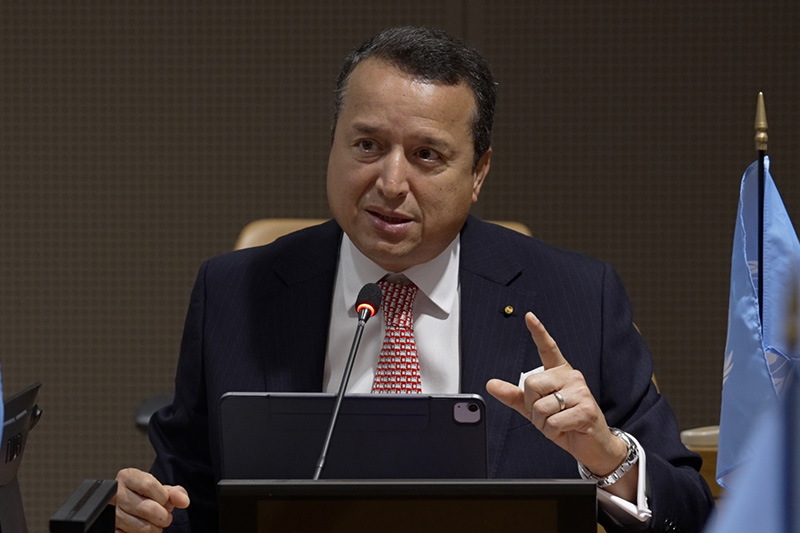
The session concluded with closing remarks from Dr Etienne Krug, Director of Health Determinants, Promotion and Prevention at the World Health Organization, who underlined the need to maintain momentum and strengthen accountability to deliver lifesaving interventions towards 2030.
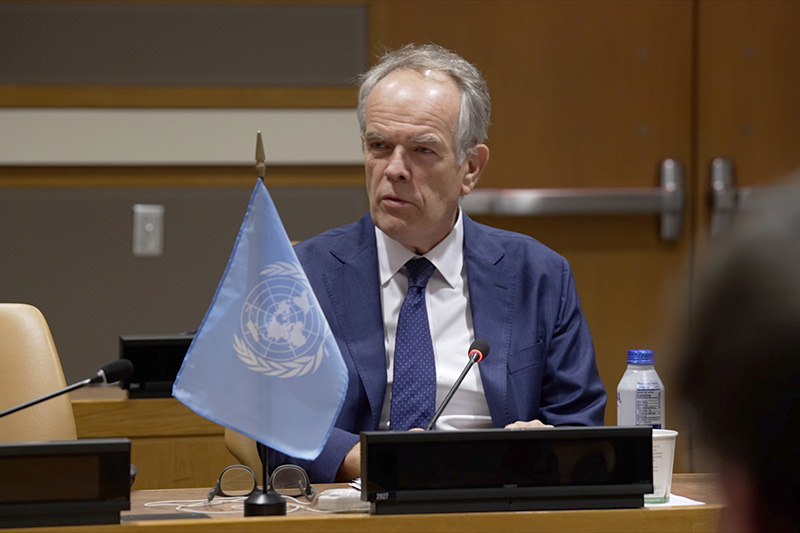
Avi Silverman, FIA Foundation Acting Executive Director, said: “The Commitments in Action Roundtable at the United Nations brings together many partners that we're working with governments that are really going in an agenda to deliver the kinds of results that we need to save lives on the roads. It's very encouraging to see the kinds of advances that are being made, particularly in areas like strengthened road safety financing , helmet standards, street design for vulnerable road users, and school zones. That's the agenda that we're putting together with our partners setting the foundations for the kind of progress that we need to see in the coming years.”
Vehicle safety was the focus of the official side event ‘Scaling Intelligent Speed Assistance: A Partnership Approach’, co-hosted by the FIA Foundation, Global NCAP and Families for Safe Streets. The event showcased Intelligent Speed Assist (ISA) and its applications to manage speed around the world. In particular, the event drew on how New York City has integrated ISA technology into its municipal fleets and to target ‘super speeders’ - individuals with multiple repeat high-speed driving offences- with advocacy support from the FIA Foundation. FIA Foundation Acting Executive Director Avi Silverman and North America Office Director and UN Representative Natalie Draisin joined partners including New York City chief fleet officer Keith Kerman, Families for Safe Streets Director Tom De Vito, and NCAP Emeritus president David Ward.
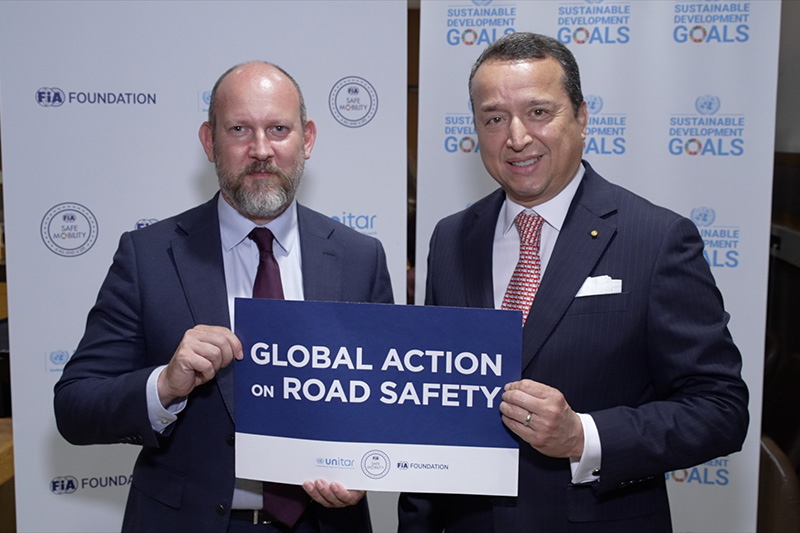
Speaking at the event, Natalie Draisin remarked: “Safe Systems runs through everything we do at the FIA Foundation. We’re an international philanthropy working for safe and sustainable mobility, and ISA is part of that work, because we won't get to a Safe System without managing speed. Simply put: more ISA means more lives saved. Safety technology doesn't usually move like this. Cities are the powerhouses. They're where change is possible, and New York is the epitome. The New York bill inspired D.C., then Virginia, and now nearly twenty bills nationwide, plus Puerto Rico. We're committed to taking what's proven here and scaling it where it's needed most. We're a small but mighty group, and what makes us mighty is what you see in this room: sharing what works across borders.”
The FIA Foundation also joined the UN Road Safety Fund Partnership Pledging Conference ‘Accelerating Road Safety and SDG Progress Through Multistakeholder Commitments’, which focused on the impact of multistakeholder commitment and collaboration. In particular, the event highlighted a shared activity programme in Rwanda between UNRSF and the FIA Foundation, which moved from identifying helmet quality challenges to introducing technical standards and enforcing the market through the first African helmet testing laboratory.


