FIA Foundation focuses on speed and data at Vision Zero Cities Conference

Life-saving speed legislation was a key focus at the Transportation Alternatives Vision Zero Cities Conference in New York City, where the FIA Foundation joined other road safety leaders.
The ‘Emerging Technology for Street Safety’ session featured Sammy’s Law and the Stop Super Speeders Bill in New York, data-led speed management mechanisms advocated for by Transportation Alternatives and Families for Safe Streets and supported by the FIA Foundation.
Natalie Draisin, Director of the FIA Foundation’s North American Office and its United Nations Representative (see main image above) moderated the session. It included Amy Cohen, Founder and President of Families for Safer Streets – and Sammy's mother, for whom Sammy’s Law is named; Leah Shahum, Director of the Vision Zero Network; Ryan McMahon, Senior Vice President of Strategy and Corporate Development at Cambridge Mobile Telematics; Jean-Baptiste Poljak, Founder and CEO of Upciti; and Andrew Miller, Principal at Paladin Consulting, who writes and speaks on the future of mobility.
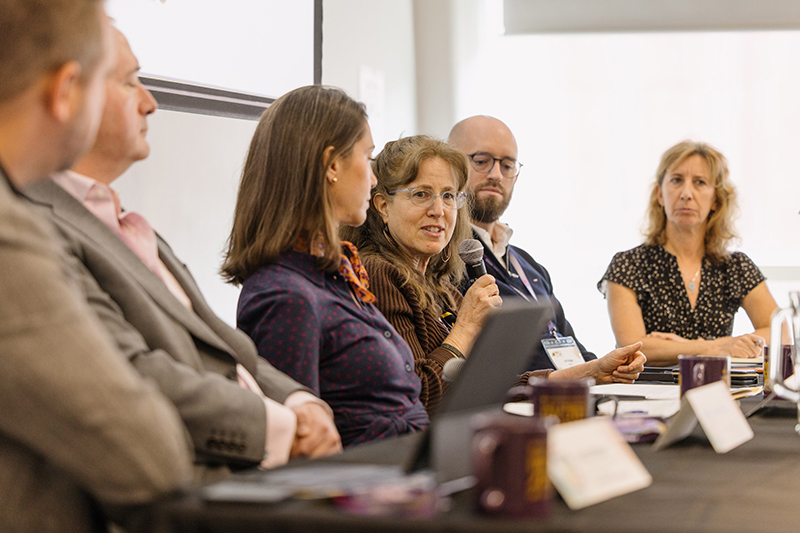
“All over the world, we see speed as a main cause of crashes, but also a fixable one. Prevention is key. There are low-cost things we can do right now to slow drivers down, like narrowing roads, and installing speed humps,” Draisin said. “But at the same time, we need to work toward the technology featured on this panel, including ISA, cameras, near-miss data, and yes, done right, Automated Vehicles. That means protecting data and privacy so people can trust it.”
Amy Cohen spoke about Stop Super Speeders laws, which require drivers with repeated, extreme speeding violations to use Intelligent Speed Assistance (ISA). ISA keeps a vehicle from going over the speed limit. Cohen highlighted how quickly these laws have spread, with bipartisan support. In one legislative session, the number of jurisdictions with them tripled, from three to nine: the District of Columbia, Virginia and Washington State, joined this year by Arizona, Georgia, Hawai‘i, Illinois, Maryland and New York. Last year, Draisin and Families for Safer Streets National Director Thomas DeVito traced that momentum in Ten Lessons from the Frontlines, published in the Vision Zero Cities Journal. This year, that analysis was extended with feedback from dozens of campaigners who led or participated in campaigns across 2026 legislative sessions.
The FIA Foundation funds Families for Safer Streets’s ISA work, including Stop Super Speeders, because victim advocacy works. Families who have lost loved ones bring lawmakers face to face with what speeding costs, and that has moved these bills in republican and democrat states alike. The discussion was particularly timely, as in October 2026 New York City Council introduced a bill requiring speed limiters for vehicles with 16 school-zone speed camera tickets in 12 months. Data shows that from January to August 2026 alone, over 16,500 drivers broke speeding laws around schools 16 or more times, 12% more than the entire year of 2025, according to Transportation Alternatives. NYC Department of Transportation has found these drivers are twice as likely to be in a serious or fatal crash.
Data can also show risk before anyone is hurt. Ryan McMahon explained that Cambridge Mobile Telematics measures speeding, phone distraction and aggressive driving through smartphone apps, and state highway safety offices use that data to find dangerous corridors. Jean-Baptiste Poljak highlighted Upciti’s light-pole sensors that count vehicles, pedestrians and cyclists, processing the data inside the sensor so images don’t leave the street. This kind of data, along with near-miss data, help cities predict and prevent crashes. On automated vehicles, Families for Safer Streets’s framework Safety First, Always, which Miller helped shape, argues they should be held to the standards of aviation, with certification before deployment and independent oversight after.
Yet none of this works without public trust. The Vision Zero Network’s Fair Warnings report sets out how speed camera programmes can earn it: put cameras where the safety need is, keep fines fair and protect the data. Efforts around Stop Super Speeders bills have addressed privacy proactively, and the Stop Super Speeders white paper, developed by Families for Safer Streets with FIA Foundation support, lays a roadmap for states to ensure privacy.


