New report: Mainstream women’s transport needs in climate responses and resilience

The design of our transport systems needs to identify and address women’s needs as part of climate change resilience and adaptation, says a new report by the International Transport Forum, supported by the FIA Foundation.
Amid unprecedented climate insecurity, cities and countries are adapting and rebuilding transport systems in the face of climate challenges, while transport users also manage recurrent risks and disruptions to their daily lives and those of their loved ones. This new report, ‘Keep Life Moving: A People-Centred Approach to Transport Resilience’, examines how transport systems can withstand shocks, maintain essential links and ultimately rebuild in a way which meets the needs of all users. This is particularly true of the needs of women, whose capacity to respond to disruptions is influenced by their unpaid caregiver roles alongside their own personal needs and responsibilities.
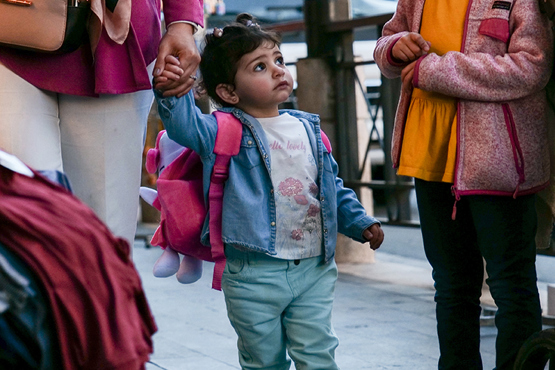
While transport is traditionally framed as a series of single-purpose journeys, for example, daily work commutes, research shows that caregivers tend to engage in multiple journeys to meet a variety of needs for multiple dependents. This pattern of movement, known as ‘trip-chaining’, could include trips to access education, health services, domestic needs, and essential services. This complex pattern of movement - particularly vulnerable to climate impacts - creates cumulative, knock-on disruption for these users, which can have severe, and often unseen, impacts on health, wellbeing and economic prosperity.
The report identifies three key shifts to better meet these needs:
Building understanding of differentiated needs and impacts of different users.
Reimagining transport to better support everyday needs.
Combining top-down and bottom-up approaches focused on empowerment and participation, integrating gender perspectives and local knowledge and experience in emergency responses.
Report author Josephine Macharia, Transportation Analyst at the International Transport Forum, said: “As the nature of climate events evolve from one-off disruptions to compounded disasters with cascading impacts, standard approaches to planning for transport resilience need to become more responsive and inclusive. Using a gender lens to look at the challenges faced by transport users gives us vital insight into their varied demands and capacities to adapt. This report sets out meaningful approaches for transport decision makers so that no-one gets left behind.”
FIA Foundation Deputy Director, Sheila Watson, added: “Women across the world, whatever their geographic or social contexts, carry much of the caregiving duties. As a result, they make far more journeys – yet their needs and experience are often overlooked. This research is particularly important as it identifies how climate disruption, in particular, is impacting women disproportionately, and how, now more than ever, we need to address those needs in transport systems that serve everyone in society.”
Download ‘Keep Life Moving: A People-Centred Approach to Transport Resilience’