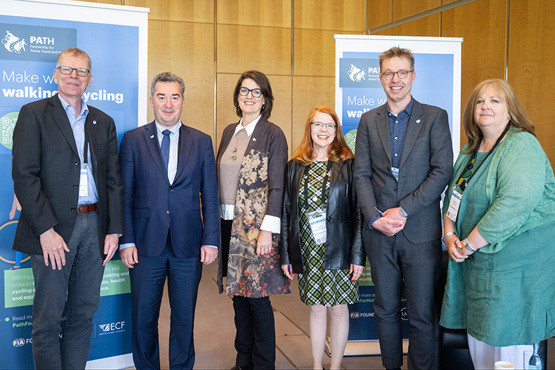
Shift and avoid transport agenda key at COP30, supported by FIA Foundation

Transport was a core issue at the COP30 climate conference in Brazil, with the Partnership for Active Travel and Health (PATH) and The Real Urban Emissions Initiative (TRUE) playing key roles, supported by the FIA Foundation.
Hosted by the Government of Brazil, the 30th UNFCCC Conference of the Parties (COP) took place in Belem, Brazil with PATH partners ECF and Walk21 and TRUE Partner the International Council on Clean Transportation taking part in a number of events including:
- ‘COP30 Action Agenda: Advancing Sustainable Urban Mobility: A Showcase of Results and Solutions’, organised by UITP, UIC, SLOCAT, PATH, TRUE, and 2030 Avoid Shift Breakthrough.
- ‘Air quality, health and climate: data and philanthropic support bridging key agendas,’ organised by Sustenta Honduras and FIA Foundation.
- ‘Unlocking Finance for Low-Carbon Transport,’ organised by UITP, ECF, Sustentar, UIC.
- ‘Walking and Cycling to Climate Resilience,’ organised by PATH Partners, the FIA Foundation, ECF, Walk21, and UNEP (PATH Partnership.
- ‘Active Mobility for Lower Emissions and Better Health,’ organised by FIA Foundation, ECF, Walk21, UNEP (PATH Partnership).
In a topical move, TRUE presented its latest study, ‘Assessment of real-world vehicle emissions in São Paulo’, alongside government organization CETESB, which highlighted the impact of the current road fleet on the most populous city in Brazil.
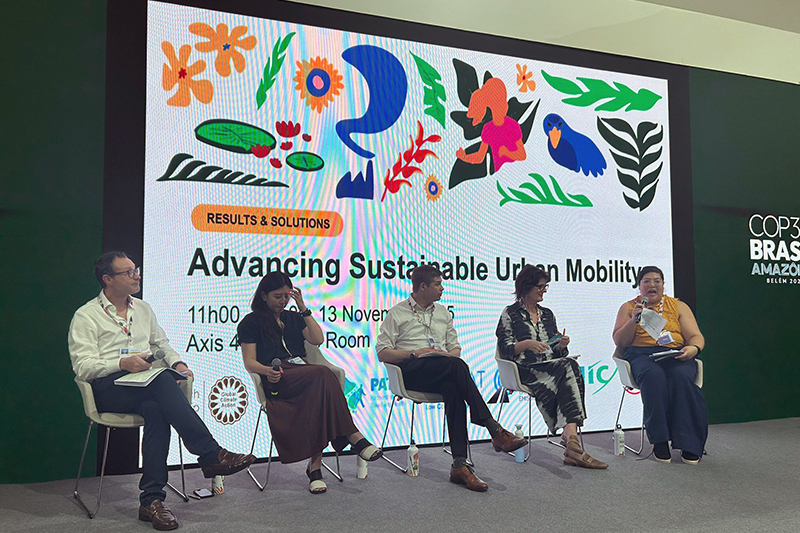
Across discussions, high-level speakers emphasised the essential role of good data and tailored policies to avoid and shift mechanisms to lower transport emissions, improve public health and expand access to safe and sustainable transport.
Ahead of COP30, PATH published the report ‘Walking + Cycling in the New Generation of NDCs – A Global Stocktake of Active Travel actions in the new Nationally Determined Contributions.’ The report presents the analysis of the seventy-one NDCs submitted until 31 October 2025, accounting for 36% of global emissions. The report evaluates the integration of walking and cycling into the NDCs, from recognition to actionable commitment. The findings provide a crucial snapshot of current ambition levels and reveal the extent to which active mobility is leveraged for climate goals, and benefits to public health, urban equity, and sustainable development. The PATH Coalition also published an open letter calling on national governments to make walking and cycling central to climate commitments, signed by over 240 organisations from more than 55 countries to date. Policymakers are urged to follow PATH’s Active Travel Policy Template for a comprehensive step-by-step guide to creating an effective policy.
The FIA Foundation, PATH and TRUE are all key contributors to the COP30 Plan to Accelerate Solutions (PAS) for Sustainable Urban Mobility, released by the UN High-Level Climate Champions, which outlines a global effort to scale up public transport, rail and active mobility as essential pathways for reducing emissions and improving urban resilience. The Plan builds on the Avoid & Shift 2030 Breakthrough launched at COP29 last year in Baku and supports countries in strengthening the transport components of their NDCs ahead of the second Global Stocktake. The ‘Scaling up public and sustainable transport in cities (avoid and shift breakthrough)’ group focuses on sustainable urban mobility actions that prioritise ‘avoid’ and ‘shift’ pathways to reduce road transport emissions, with a focus on public transport, rail, and active mobility. The six coordinated actions aim to accelerate the shift towards cleaner, healthier and more resilient transport systems while supporting governments and cities to raise ambition on walking, cycling and sustainable public transport:
- Action 1: Advance the Avoid & Shift Breakthrough: Partner with selected cities and countries, identified through NDC3.0 reviews, to accelerate Avoid and Shift strategies. The program will promote NDC best practices and provide targeted capacity-building support based on mode-specific NDC templates and guidelines.
- Action 2: To build sector capacity at scale, including doubling current training levels, targeting emerging and rapidly urbanising cities, and expanding active travel training through regional networks.
- Action 3: Enable Sustainable Transport Investments: Develop technical report translating Article 6.2 and 6.4 standards into actionable guidance for governments, financial institutions, and sustainable transport organisations, helping enhance access to climate finance, de-risk transport investments, and improve the bankability of rail, public transport, and active mobility.
- Action 4: Strengthen Public & Political Support: Global awareness raising to promote health, wellbeing, and cost-saving benefits of walking and integrating with public transport.
- Action 5: Support NDC Ambition: Support regional commissions to develop transport NDC templates (based on mode-specific NDC guidance), enabling technical assistance and capacity-building for countries to scale up rail, public transport and active mobility solutions in transport NDCs in order to advance Avoid Shift pathways.
- Action 6: Foster Global Peer Learning: Showcase innovations, foster knowledge exchange, partnerships and strengthen collaboration among national and local governments, development partners, and industry.
Main photo credit: COP30 Brasil Amazônia